

SkyBet Football Predictions for Nigerian Bettors
⚽ Get top SkyBet football predictions today to boost your Nigerian betting wins! Learn tips, decode insights & play smart with local market know-how. ₦
Edited By
George Lewis
Mathematical football predictions have become a serious tool for many Nigerian sports bettors looking to improve their game. Instead of relying on gut feelings or hearsay from friends, bettors now get access to number-backed insights that analyse past matches, player form, and other key stats. This shift marks a clear move towards evidence-driven decision-making.
What sets mathematical predictions apart is their ability to process large sets of data. For example, models might look at a team’s recent win-loss ratio, goals scored and conceded, injury reports, and even travel fatigue from long trips. These variables get turned into probabilities about match outcomes — win, loss, or draw.
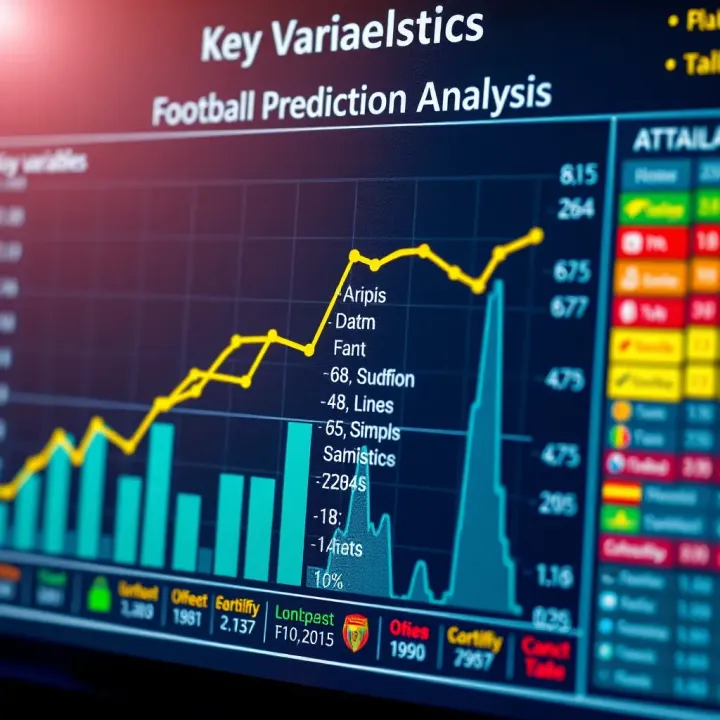
The methods used vary from simple statistical analysis to more complex ones like machine learning algorithms. A basic approach is Poisson distribution, which estimates the likely number of goals scored based on historic data. On the other hand, advanced models factor in external aspects such as weather conditions or refereeing trends, giving bettors a richer picture.
Numbers don’t just predict results; they help manage betting risks effectively.
That said, mathematics is no crystal ball. Football remains unpredictable due to human factors and sudden game-changing events. But maths increases the chances of making smarter calls instead of relying solely on luck. For Nigerian bettors, combining these predictions with local knowledge about teams and players offers the best edge.
To sum up, mathematical football predictions bring clarity and structure to sports betting. They allow you to spot value bets that traditional tips might miss. Whether you use simple stats or complex models, the key is to understand the data behind the numbers and use them smartly to guide your wagers.
Mathematics plays a key role in predicting football outcomes, offering a more systematic way to assess matches than mere guesswork. Bettors and analysts in Nigeria increasingly rely on data-driven models to understand how likely certain results are, improving betting decisions and reducing risks. Mathematical predictions help quantify uncertainties and spot trends that might be invisible to the naked eye.
Statistical analysis involves gathering and examining numbers related to past football matches. This includes goals scored, shots on target, possession rates, and many other factors. The goal is to find patterns that indicate how a team or player might perform in the next match. For example, a Nigerian club scoring on average two goals per match against weaker opponents can be predicted to replicate similar performances unless conditions change.
Predictive algorithms use mathematical formulas to estimate future outcomes based on historical data. Popular algorithms include regression analysis, logistic models, and machine learning approaches. These algorithms crunch large datasets to identify relationships, such as a striker's scoring frequency against specific defence types. For Nigerian league analysis, machine learning models can incorporate factors like home advantage and referee tendencies to improve accuracy.
Probability allows bettors to understand the chances of various results — win, lose, or draw — occurring in a match. These chances are expressed as percentages or odds, helping in risk assessment. Statistics support this by providing the data foundation, such as average goals conceded at home versus away matches. For instance, if a team has a 70% chance to win at home based on stats, a bettor can weigh this against offered odds to make informed stakes.
This data covers previous games and their outcomes — who played whom, scores, venues, and match importance. For example, understanding how Enyimba FC performed against Kano Pillars in the past seasons helps predict future results when they meet again. This insight is crucial in spotting form streaks or head-to-head dominance.
Numbers like pass accuracy, shots on target, tackles won, and even distance covered by a player give a detailed picture of current player form. If a forward consistently converts chances, a team’s likelihood to score rises. For Nigerian teams, integrating player stats from platforms like the NPFL official reports and broadcast data offers more refined prediction inputs.
Recent performance trends and injury reports heavily influence predictions. If a team has lost three matches in a row or key players are sidelined, their chances dip noticeably. Knowing that a star midfielder is unavailable for a match because of injury or suspension can be factored mathematically to adjust predicted outcomes accordingly.
Accurate football predictions depend heavily on combining multiple data types. Using only historic scores without considering injuries or player form rarely yields reliable tips.
By leveraging these mathematical models and data types, football fans and bettors in Nigeria can sharpen their predictions and improve the odds of success in betting and analysis.
Mathematical techniques offer a sharper lens for predicting football matches, providing more structured insights than gut feeling alone. In Nigeria’s vibrant betting scene, these models bring science to a game often ruled by passion. Understanding popular methods helps bettors make smarter, data-backed decisions rather than relying solely on hearsay or superstition.
The Poisson distribution is a statistical tool used to predict the likelihood of a certain number of goals scored in a match. The model assumes that goals happen independently and at a constant average rate. This makes it useful for forecasting match results by calculating the probability of specific scorelines, such as 1-0 or 2-2. Because football typically has low scoring matches, the Poisson model fits well for estimating outcomes.

In the Nigerian Professional Football League (NPFL), analysts apply the Poisson model by using historical data like average goals per match and home/away performance. For example, if Kano Pillars tend to score 1.3 goals per game at home and their opponents average 0.8 away, the model calculates probabilities of possible scores for upcoming fixtures. This approach assists local bettors in estimating which matches are likely to have few or many goals, enhancing their chances in markets such as ‘under/over goals’.
Machine learning algorithms absorb massive amounts of football data—from player stats to team form—and learn patterns without explicit programming. Nigerian football platforms increasingly use supervised learning models, feeding them thousands of past matches to predict outcomes. These algorithms continuously improve by recognising subtle trends that humans might miss, such as how weather or referee decisions can affect results.
Compared with traditional tips from experts or pundits, machine learning predictions tend to be more consistent and less biased. While human tips can be swayed by emotions or popular narratives, AI models rely strictly on data. That said, machine learning is not flawless—unexpected events like injuries or last-minute tactical changes remain difficult to factor in fully. Nonetheless, bettors combining AI-driven forecasts with on-the-ground knowledge often enjoy better returns, especially in competitive Nigerian leagues.
For bettors serious about improving outcomes, understanding these mathematical tools is a must. Poisson models give concrete probability estimates, while machine learning uncovers deeper insights—both can elevate your betting strategy beyond guesswork.
By embracing these approaches, Nigerian football fans stand a better chance of navigating the unpredictability of football with informed bets.
Knowing both the strengths and limitations of mathematical predictions is key to making smart football betting decisions. These predictions offer a data-backed perspective, but football's unpredictability means they are not foolproof. By weighing the benefits against the challenges, bettors can better understand when to trust the numbers and when to look beyond them.
Mathematical football predictions remove much of the guesswork from betting by relying on data rather than hunches or emotions. Unlike traditional tips, which can be biased by fan loyalty or gut feelings, data-driven models look at real numbers — like past match results, player statistics, and team form. For example, if a team has consistently scored an average of two goals per home match over several weeks, a mathematical model can use this to forecast probable outcomes more accurately.
This objectivity helps keep bettors grounded, especially in matches with strong contenders on both sides. It cuts through hype, such as fan chatter around star players’ presence, and guides decisions based on measurable trends rather than rumours or news buzz.
For sports bettors and analysts, mathematical predictions offer a systematic way to approach match forecasting. Bettors can compare predicted probabilities with bookmaker odds to spot value bets—places where the odds are better than the prediction suggests. Analysts, on the other hand, gain a tool to confirm hypotheses or highlight anomalies worth investigating.
For instance, in Nigerian football leagues, a bettor might notice that a team like Enyimba consistently outperforms statistical expectations during ember months. By relying on number-based predictions combined with local knowledge of team conditions and environment, bettors stand a better chance of placing winning bets.
Football remains deeply unpredictable despite data, because many variables defy easy quantification. Sudden weather changes, referee decisions, player injuries minutes before kickoff, or even travel fatigue can skew results sharply. Consider a Lagos derby where heavy rain turns the pitch sloppy and favours the underdog’s defensive style — statistical models may miss such fine but powerful influences.
This uncertainty means mathematical predictions should be viewed as guides, not guarantees. A model might predict a draw, but late red cards or a goalkeeping blunder might turn the game upside down. Bettors need to keep a close eye on game-day developments to adjust their strategies accordingly.
Another challenge is the reliability and scope of available data, especially within Nigerian football. Many local matches do not have comprehensive statistics recorded or timely updates, unlike some European leagues where data feeds are robust and real-time.
Incomplete or outdated data can mislead mathematical models, producing forecasts that stray from reality. For example, if injury reports are not factored in due to lack of access, predictions may overrate a team’s strength. Data gaps force bettors to combine models with on-ground knowledge or trusted local sources to improve accuracy.
In football betting, numbers are powerful tools but not crystal balls. Understanding their strengths and weaknesses helps you play your cards wisely and avoid common pitfalls.
Mathematical football predictions have gained traction among Nigerian fans and bettors because they offer a structured way to assess match outcomes beyond mere hunches. Instead of relying solely on superstition or favourite teams, bettors now use maths-based forecasts to guide their decisions, reducing guesswork and increasing potential wins. This blend of numbers and intuition reflects the growing sophistication in Nigeria’s football betting scene.
Several Nigerian platforms provide mathematical models tuned to our unique football environment. Apps like Betking and Nairabet increasingly integrate data analytics into their tips, offering users forecasts based on recent team performance, player availability, and league trends. These platforms matter because they incorporate local league nuances which global systems might overlook.
Additionally, emerging football analytics startups in Lagos and Abuja use machine learning algorithms trained on Nigerian Professional Football League (NPFL) data. This focus on local specifics helps bettors evaluate probabilities better, especially when form and injury reports often differ from what's available abroad.
Nigerian bettors also access international football prediction platforms like Forebet and Betegy, which cover top European leagues. These services use global data sets and advanced algorithms, offering another layer of insight, especially where Nigerian players are involved abroad.
The challenge is adapting these global predictions to local betting markets and conditions. Still, many Nigerian bettors combine these forecasts with their knowledge of NPFL dynamics for a richer perspective.
Relying solely on numbers can mislead if local variables are ignored. Understanding how Nigerian clubs operate — such as travel challenges, pitch conditions in certain states, and player motivation during derby matches — can shift the probability landscape significantly.
For example, if a star player is suspended but the team typically performs better at home despite missing key players, local insight helps refine the pure mathematical forecast. This combination makes predictions practical and credible.
Traditional tips — from seasoned football watchers, former players, or trusted local pundits — often capture intangible factors like team morale or managerial tactics. Maths cannot yet fully account for these human elements.
Therefore, savvy bettors blend quantitative models with qualitative tips. For instance, statistics may favour one side, but if a traditional tipster notes recent internal conflicts or training ground issues, a bettor might reassess the expected outcome. This balance yields smarter bets rather than relying on one approach only.
Combining mathematics with local knowledge and experience often leads to higher success rates for Nigerian football bettors, turning raw data into actionable insights.
By exploring a range of sources and integrating local realities, Nigerian football fans and bettors can make the most of mathematical predictions, bridging global technology with homegrown wisdom.
Mathematical football predictions offer valuable insights, but their effectiveness depends on how you use them. Understanding the data behind these predictions and blending them with your own knowledge can improve decision-making, especially when placing bets or analysing matches. This section guides you on the key ways to get the best out of number-based forecasts.
It's vital to examine the source and type of data feeding the predictions. Ask: How recent is the data? Does it include local league specifics or just international stats? For example, Nigerian football leagues have unique dynamics—frequent player transfers and inconsistent fixture schedules—that may not be captured fully by some models. If the data ignores this, the predictions could be misleading.
Also, consider whether the model includes variables like player injuries or weather conditions, which often affect outcomes but are tricky to quantify. Knowing what inputs matter helps you judge the reliability of predictions before acting on them.
Not all predictions come with the same level of certainty. Many mathematical models provide a confidence score indicating how likely the forecast is to be accurate based on available data. Pay attention to these scores as they help differentiate strong tips from those based on shaky assumptions.
For instance, a model might predict a win for a Lagos team with 85% confidence because of solid recent form and no injuries. Meanwhile, a prediction for an Ibadan match may have lower confidence due to missing player data. Recognising these differences prevents overreliance on uncertain forecasts.
Matchday factors such as pitch quality, weather, and crowd presence can affect player performance significantly. Mathematical models rarely incorporate the nuances of a heavy rainfall disrupting play or the boost a home crowd gives to underdog teams.
For example, during the rainy season in Nigeria, games on poorly drained fields often see fewer goals, which might skew purely statistical forecasts. Including such intuitive observations alongside maths-based tips makes your betting choices sharper.
In Nigerian leagues, late changes in the squad due to injuries, suspensions, or even travel issues are common. These last-minute developments may not get reflected immediately in models, making it critical for you to stay updated through trusted local sources.
Imagine a star striker ruled out hours before kickoff—ignoring such news and following a prediction ignoring that fact could cost you your bet. Staying alert to real-time updates and balancing them against model outputs allows smarter betting decisions.
Using mathematical football predictions effectively requires more than blind trust in numbers. It demands questioning the data quality, understanding assumptions, and mixing statistical insights with local knowledge and timely info. This balanced approach offers the best chance to win in Nigeria’s unpredictable football scene.
By applying these tips, you stand a better chance of interpreting forecasts realistically and making profitable choices whether at a betting shop or analysing games with friends.
⚽ Get top SkyBet football predictions today to boost your Nigerian betting wins! Learn tips, decode insights & play smart with local market know-how. ₦

⚽ Get reliable SkyBet football predictions to boost your chances in Nigerian sports betting. Learn how bets are forecast and tip for responsible wagering with real insights.

⚽ Get today’s SkyBet Bundesliga predictions with tips crafted for Nigerian bettors. Learn how to maximise your ₦, navigate local betting options, and boost your chance of winning!

🏏 Discover how SkyBet cricket predictions help Nigerian bettors make smarter wagers using stats, data insights, and practical tips to boost your chances of winning ₦.
Based on 8 reviews